Running a restaurant or a retail shop is hard work. You worry about customers, staff, stock, and bills. But there is one thing that should never keep you up at night: rubbish.
Yet, for many business owners, waste is a daily headache. The bins overflow. The back alley smells. You miss a collection, and suddenly you have bags of trash piling up by the fire escape. Customers notice. So do the council inspectors.
This is why commercial skip hire with weekly swap-out exists. It is not the same as hiring a skip for a home renovation. It is a professional, regular service designed for busy businesses that generate waste every single day.
This guide explains exactly how it works, why your restaurant or retail shop needs it, and how to choose the right service.
As one commercial waste provider explains: For restaurants and retail shops, this reliability is everything. Businesses across Australia, including commercial skip hire services, focus on delivering consistent and timely waste solutions for commercial needs.
What Is Commercial Skip Hire with Weekly Swap-Out?
Let us start with a simple definition.
Commercial skip hire means a waste company provides bins specifically for businesses, not homes. These bins are usually front-load bins or wheelie bins ranging from 2 cubic metres to 10 cubic metres.
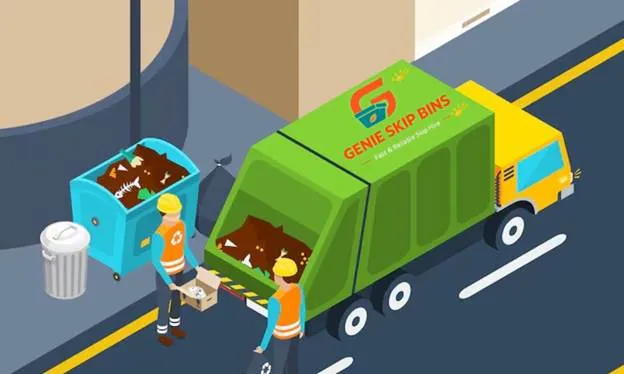
Weekly swap-out means the company comes to your business on the same day every week. They take away the full bin and leave an empty one in its place. Swap. Replace. Done.
Think of it like a nappy service for your business waste. You never have to take rubbish to the dump. You never have to chase a truck. The skip company handles everything on a set schedule.
As one commercial waste provider explains: “We make sure you get timely delivery, easy booking and responsible rubbish removal” Rapid Bins . For restaurants and retail shops, this reliability is everything.
Why Restaurants Need Weekly Swap-Out (More Than Anyone)
Restaurants are waste machines. Every single day, you generate:
● Food scraps from food preparation
● Spoiled ingredients past their use-by date
● Cardboard boxes from deliveries
● Glass bottles (wine, beer, soft drink)
● Plastic containers and packaging
● General rubbish from customers
According to End Food Waste Australia, the hospitality sector discards the equivalent of 4.6 million meals each year, with only 2% repurposed. That is not just a sustainability problem; it is a massive cost leak.
But here is the real issue: food waste smells. It rots quickly. It attracts rats, cockroaches, and flies. In the summer heat, a bin full of food scraps becomes unbearable within two or three days.
Waiting a fortnight for collection is simply not an option for any business that handles food. Weekly swap-out ensures that smelly, rotting waste leaves your property before it becomes a health hazard.
As one waste management code states: “Solid waste shall be collected from commercial premises which involve food preparation not less frequently than once a week”. In many areas, weekly collection for food businesses is not a suggestion—it is the law.
Why Retail Shops Benefit from Weekly Swap-Out
Retail shops have different waste problems than restaurants, but they are just as urgent.
If you run a clothing store, you deal with plastic hangers, cardboard tags, and packaging waste. If you run a grocery store, you have expired products and produce waste. If you run a furniture or electrical store, you have large boxes and polystyrene.
The biggest challenge for retail is cardboard. A single delivery day can produce a mountain of boxes. Stack them in the back room, and you have a fire hazard. Leave them in the alley, and you risk fines for illegal dumping.
A weekly swap-out service gives you a dedicated bin for cardboard and recyclables. You fill it during the week. The company takes it away and recycles it properly. As Australian National Recyclers notes, proper waste management can achieve “significant savings in expenditure through improved management of waste and recycling systems”.
For retail shops, the alternative is worse: multiple trips to the tip in your personal car, paying staff overtime to deal with rubbish, or risking council fines.
For retail shops, the alternative is worse: multiple trips to the tip in your personal car, paying staff overtime to deal with rubbish, or risking council fines. Many Adelaide-based businesses now rely on trusted providers such as affordable waste management services in Adelaide.
How Weekly Swap-Out Works (Step by Step)
The process is simple and designed for busy business owners.
Step 1: Assessment
A waste provider visits your business (or does a virtual assessment) to understand:
● What type of waste you generate (food, cardboard, general, glass, etc.)
● How much volume you produce each week
● Where bins can be placed (loading dock, back alley, side street)
● Any access issues (narrow laneways, parking restrictions)
Step 2: Bin Selection
Based on the assessment, the provider recommends specific bins. Options typically include:
● Wheelie bins (64 to 96 gallons) for smaller businesses
● Front-load bins (1 to 10 yards) for medium volumes
● Cage bins for cardboard and recyclables
● Skip bins (3m³ to 9m³) for larger commercial operations
Step 3: Schedule Setup
You agree on a collection day. Most businesses choose:
● Once weekly for general waste
● Twice weekly for high-volume restaurants (especially in summer)
● Fortnightly for low-volume offices or shops
The provider then locks in that day. Every Tuesday (or whatever day you choose), the truck arrives.
Step 4: Ongoing Service
Each week on collection day:
● The truck comes to your location
● The driver empties your bin into the truck
● If it is a swap-out, they leave a clean, empty bin
● You pay a predictable monthly invoice
That is it. No phone calls. No chasing. No emergency trips to the tip.
As Martlands Skip Hire explains: “Prompt collections are a cornerstone of our service. We coordinate with you to schedule regular collections aligned to site activity and quick turnarounds after loading to keep site access clear”.
Bin Sizes for Different Business Types
Choosing the right bin size saves money. Too small, and you overflow. Too large, and you pay for unused space.
|
Business Type |
Recommended Bin |
Volume |
Frequency |
|
Small café (takeaway only) |
2–3 wheelie bins (240L each) |
500–750L |
Weekly |
|
Medium restaurant (50 seats) |
4m³ front-load bin |
4 cubic metres |
Weekly |
|
Large restaurant (100+ seats) |
6m³ to 8m³ skip bin |
6–8 cubic metres |
Twice weekly |
|
Boutique retail shop |
3m³ bin |
3 cubic metres |
Weekly or fortnightly |
|
Supermarket or large retailer |
10m³ bin + cardboard cage |
10+ cubic metres |
Twice weekly |
Pro tip: As one provider notes, “If you are not sure what you need, try one of our industry specific waste bundles”. Many companies offer pre-designed packages for restaurants, retail, and accommodation sectors.
Cardboard and Recycling for Retail
For retail shops, cardboard is the main event. A single delivery of stock can leave you with dozens of flattened boxes.
The best solution is a dedicated cardboard bin or cage bin. These are separate from your general waste bin. You fill them with flattened cardboard. The recycling truck collects them weekly and takes the cardboard to a paper recycling facility.
Some providers also offer co-mingled recycling bins for glass, plastic, and metal.
Cost-saving tip: Recycling bins are often cheaper than general waste bins because recyclable materials have value. The more you recycle, the lower your total waste bill.
Managing Seasonal Peaks
Every business has busy seasons. For restaurants, it is the Christmas period, Valentine’s Day, and summer holidays. For retail, it is the lead-up to Christmas and end-of-financial-year sales.
During these peaks, your waste volume can double or triple. A standard weekly collection may not be enough.
Good commercial skip bins providers offer additional collections for seasonal peaks.
Plan ahead: Before the busy season starts, call your provider and discuss your expected waste increase. Book the extra services early. Do not wait until your bins are overflowing on a Friday night of a long weekend.
Compliance and Council Rules
Commercial waste is regulated differently than household waste. You have legal obligations as a business owner.
Duty of Care
Under Australian environmental laws, businesses have a duty of care for their waste. You must ensure your waste is stored safely, collected by a licensed carrier, and disposed of at a legal facility. If your waste ends up illegally dumped, you can be held responsible.
Council Permits for Bin Placement
If your bins are on private property (like a loading dock or back carpark), you generally do not need a permit. If bins are on public property (like a footpath or street), you may need council approval. As one provider notes: “You must have proper permission from the city council to put a skip bin on the street or public land. The skip bin must not block any pedestrian or the way” Genie Skip Bins in Cairns.
Food Waste Separation Laws
As mentioned, NSW FOGO mandates start July 2026. Other states are likely to follow. If you run a food business, start separating food waste now to get ahead of the regulations.
Record Keeping
You should keep records of waste collection for at least three years. This proves you are meeting your duty of care. Most commercial skip bins providers give you online access to invoices and collection schedules. As WM New Zealand notes, you can “login any time and see your upcoming collection” through their online platform.
If your bins are on private property (like a loading dock or back carpark), you generally do not need a permit. If bins are on public property (like a footpath or street), you may need council approval. Many local providers, including skip bin hire Northern Territory, also guide customers through council rules and proper bin placement requirements.
Choosing the Right Commercial Skip Provider
Not all waste companies understand business needs. Here is what to look for:
What to Look For:
● Industry experience: Do they work with restaurants or retail shops? Can they provide references?
● Online account management: Can you view schedules, request extra pickups, and access invoices online?
● Flexible scheduling: Do they offer additional collections for seasonal peaks?
● Clear pricing: Is there a monthly invoice with no hidden fees?
● Recycling options: Do they offer separate bins for food waste, cardboard, and co-mingled recycling?
● Multiple site management: If you have more than one location, can they service all of them under one account?
Red Flags to Avoid:
● Requiring long-term contracts (month-to-month is fine)
● No online account access
● Vague pricing or surprise fees
● No dedicated bin for food waste
● Poor reviews about missed pickups
Cost of Commercial Skip Hire
Pricing varies by location, bin size, and collection frequency. However, here is a rough guide:
|
Bin Size |
Typical Weekly Cost (General Waste) |
Typical Weekly Cost (Recycling) |
|
240L wheelie bin |
$15 – $25 |
$10 – $15 |
|
3m³ bin |
$60 – $90 |
$40 – $60 |
|
6m³ bin |
$100 – $150 |
$70 – $100 |
|
10m³ bin |
$150 – $220 |
$100 – $150 |
Note: Food waste bins (organics) are often priced similarly to recycling bins because the waste is processed into compost rather than sent to landfill.
Savings tip: Ask about combined services. Some providers offer discounts if you bundle general waste, recycling, and organics together.
Conclusion: Stop Worrying About Waste
Commercial skip hire with weekly swap-out is not complicated. It is a simple, reliable system: the bin arrives, you fill it, the truck swaps it. Every week. Like clockwork.
For restaurants, it means no more smelly bins, no more pests, and full compliance with food waste separation laws. For retail shops, it means no more cardboard mountains and no more weekend tip runs.
The cost is predictable. The service is hands-off. And your back alley stays clean.
Stop letting waste management be a headache. Set up a weekly swap-out today and focus on what you do best: running your business.
