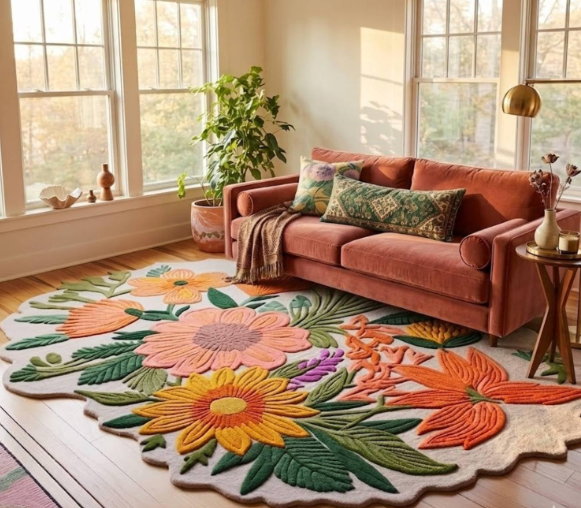
The best material for floral rugs depends on your lifestyle. Wool suits most homes with its durability and comfort. Silk works best in low-traffic areas. Synthetic options like polypropylene and nylon are ideal for busy households with kids and pets. Cotton is a budget-friendly choice for light use.
Floral rugs do more than fill floor space—they anchor a room, add warmth, and bring personality to an otherwise plain space. But picking the wrong material can mean faded colors, worn-out fibers, or a rug that looks great for six months and falls apart after that.
The right material depends on three things: how much foot traffic the area gets, how much upkeep you’re willing to do, and what you’re willing to spend. This guide breaks down each major rug material so you can make a confident, informed choice—whether you’re shopping for handcrafted rugs in Delhi or looking to buy carpets online in India.
Understanding Floral Rug Materials: Natural vs. Synthetic
Floral designs require materials that hold color well and allow for fine detailing. A bold peony or a delicate vine pattern only looks as good as the fiber that carries it.
Rug materials fall into two broad categories: natural fibers (wool, cotton, silk) and synthetic fibers (polypropylene, nylon). Each has clear strengths and real trade-offs. Blended materials—combining natural and synthetic fibers—sit in the middle, offering a balance of both.
Wool Floral Rugs: The All-Round Choice
Wool is widely regarded as the most reliable material for floral rugs. It holds dye exceptionally well, which means floral patterns stay vivid over time. Wool fibers also have a natural lanolin coating that repels liquid and resists staining without any chemical treatment.
Best for: Moderate to light-traffic areas like living rooms and bedrooms.
Key benefits:
-
Naturally stain-resistant and durable
-
Holds intricate floral patterns without distortion
-
Soft underfoot with a dense, cushioned feel
-
Easy to maintain with regular vacuuming
Wool rugs tend to cost more upfront, but they last significantly longer than most alternatives—making them a smart long-term investment. Brands like The Ambiente, based in Bhadohi (India’s largest handmade carpet hub), craft wool rugs using traditional hand-knotting techniques that produce tight, detailed floral patterns built to last decades.
Cotton Floral Rugs: Affordable and Breathable
Cotton rugs are soft, lightweight, and easy on the budget. They work well in warm climates because they’re breathable and don’t trap heat the way wool can.
Best for: Low-traffic spaces, warm climates, and budget-conscious buyers.
Key benefits:
-
Soft and comfortable underfoot
-
Available in a wide range of colors and patterns
-
Affordable entry point for floral rug designs
-
Many cotton rugs are machine-washable
The downside? Cotton wears faster than wool. In high-traffic areas, cotton fibers flatten and fray more quickly. Floral patterns may also lose definition after repeated washing. Cotton rugs work best in bedrooms, reading nooks, or any space that doesn’t see heavy daily foot traffic.
Silk Floral Rugs: Premium Look, Careful Handling Required
Silk produces the most visually striking floral rugs. The natural sheen of silk fibers catches light in a way that makes colors pop and fine details stand out. A silk floral rug in a traditional Persian or Indian style can look almost like a painting on the floor.
Best for: Low-traffic spaces like formal living rooms, studies, or display areas.
Key benefits:
-
Exceptional color vibrancy and depth
-
Ideal for showcasing intricate, fine floral work
-
Smooth, luxurious texture
-
High visual impact
Silk rugs require professional cleaning and careful placement—away from moisture, heavy furniture, and direct sunlight. They’re also the most expensive option. If you want the visual impact of silk without the fragility, consider a silk-wool blend, which gives you some of the sheen with added durability.
The Ambiente’s handcrafted silk rugs, woven by over 4,000 skilled artisans (predominantly women) in Bhadohi, are a strong example of how traditional craftsmanship elevates floral designs into fine art.
Synthetic Materials: Built for Busy Households
If your home has kids, pets, or high foot traffic, synthetic fibers are worth serious consideration. They’re engineered for durability and easy care.
Polypropylene
Polypropylene (also called olefin) resists stains, moisture, and fading—making it one of the most practical choices for everyday use. Floral designs printed or woven into polypropylene rugs hold up well in sunlit rooms since the fiber doesn’t bleach easily.
Nylon
Nylon is the toughest synthetic fiber available in rugs. It handles heavy foot traffic, resists crushing, and springs back into shape after use. Families with active kids or large pets will find nylon rugs hold up far better than natural fibers in similar conditions.
Best for: High-traffic areas, homes with children and pets, outdoor-adjacent spaces.
Key benefits:
-
Stain and moisture resistant
-
Budget-friendly compared to wool and silk
-
Easy to clean—most can be spot-cleaned or hosed down
-
Long-lasting in demanding environments
The trade-off with synthetics is that they don’t always match the warmth or tactile comfort of natural fibers. They also tend to feel less premium underfoot.
Handcrafted Rugs in Delhi: Quality Built on Tradition
Beyond material, the way a rug is made matters. Machine-made rugs use synthetic backing and automated weaving, which limits the intricacy of floral patterns. Handcrafted rugs, by contrast, allow artisans to work complex designs with precision—stitch by stitch.
The Ambiente, with its flagship store at Pillar No. 11B, Mehrauli-Gurgaon Road in New Delhi, offers handcrafted rugs in Delhi that combine traditional weaving techniques with contemporary floral design. Backed by 30 years of expertise through its parent company Bhadohi Carpets, and founded by Avani Khandelwal (MBA, MDI Gurgaon), the brand has served over 5,000 clients across India and internationally.
Choosing a handcrafted rug means investing in something that holds its structure and pattern quality for decades. The tighter the knot count, the more detailed and durable the floral design.
Choosing the Right Material for Your Lifestyle
Here’s a quick reference to match your needs:
|
Lifestyle |
Best Material |
|
Light-traffic spaces (bedroom, study) |
Silk or wool |
|
Families with young children |
Wool or synthetic blends |
|
Pet owners |
High-quality wool or nylon |
|
Budget-conscious buyers |
Cotton or polypropylene |
|
Collectors and design enthusiasts |
Handcrafted silk or wool |
Where to Buy Carpets Online in India
The easiest way to compare materials, patterns, and price points is to buy carpets online in India through trusted retailers. Look for brands that offer:
-
Clear material labeling (wool, silk, polypropylene, etc.)
-
Authentic handcrafted options with artisan details
-
Quality guarantees or return policies
-
Customer reviews on durability and cleaning
The Ambiente’s online store offers a curated range of ready-to-ship and bespoke floral rugs, with transparent details on materials and craftsmanship. Shopping online also gives you access to pieces that may not be available locally—especially handcrafted options from weaving hubs like Bhadohi.
Choose Smart, Then Invest
A floral rug should last—and look good doing it. Wool gives you the best all-round performance for most homes. Silk delivers unmatched visual impact for low-traffic spaces. Synthetics handle the tough jobs that natural fibers can’t. Cotton works for light use and tight budgets.
Match the material to how you actually live. A rug that suits your lifestyle will stay beautiful far longer than one chosen purely for looks. And when you’re ready to buy, explore handcrafted options—they carry craftsmanship and quality that mass-produced alternatives simply can’t match.
Frequently Asked Questions
What is the most durable material for floral rugs in high-traffic areas?
Nylon and polypropylene are the most durable synthetic options for high-traffic areas. For a natural fiber alternative, high-quality wool—especially hand-knotted wool—holds up well under daily use and resists staining better than cotton or silk.
Are silk floral rugs worth the cost?
Silk floral rugs are worth it if you want premium visual impact in a low-traffic area. Silk displays color and fine floral detail better than any other fiber. However, silk rugs require professional cleaning and careful placement, which adds to the long-term cost.
What material works best for floral rugs in homes with pets?
Nylon or high-quality wool work best for pet owners. Nylon resists scratching and is easy to clean. Wool has natural stain resistance and durability. Avoid silk and loosely woven cotton in pet-heavy areas.
How do I maintain a wool floral rug?
Regular vacuuming (two to three times per week in high-traffic areas) keeps wool rugs clean and prevents fiber flattening. Spot-clean spills immediately with a damp cloth. Professional cleaning every 12 to 18 months helps maintain the rug’s structure and color.
Where can I find handcrafted floral rugs in Delhi?
The Ambiente has a flagship store at Pillar No. 11B, Mehrauli-Gurgaon Road, New Delhi. The brand offers handcrafted silk and wool floral rugs made by skilled artisans in Bhadohi, with both ready-to-ship and bespoke options available online and in-store.
Is it safe to buy carpets online in India?
Yes, provided you shop from established retailers that list clear material details, offer return policies, and show verified customer reviews. Look for brands that provide transparency about craftsmanship and sourcing.