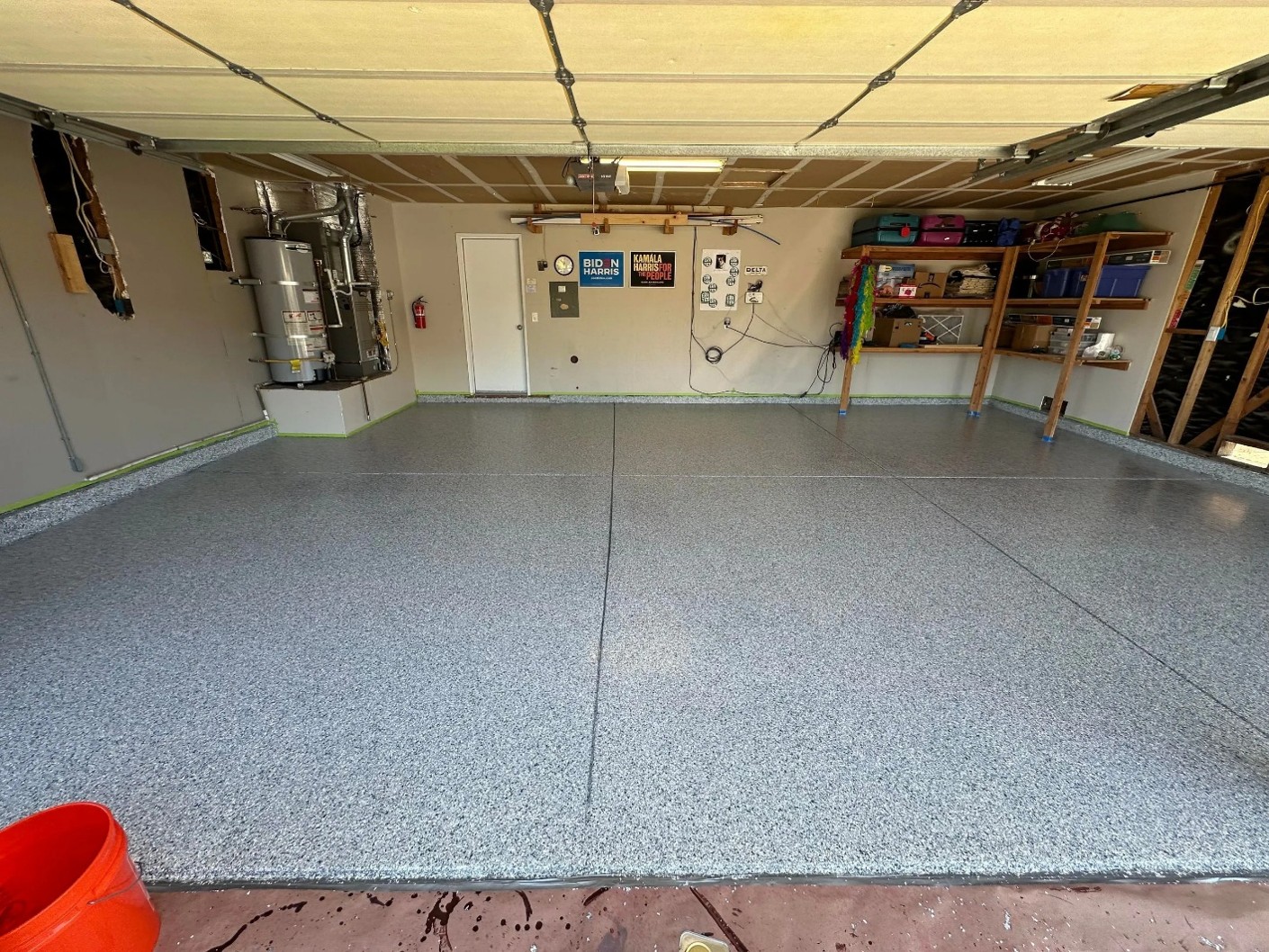
Garages across North America take constant abuse from rolling car tires, leaked engine oil, dropped heavy metal tools, and muddy boots. Bare concrete drinks up spills fast, leaving dark, ugly spots and soft, rough spots in time. Putting down a real epoxy garage floor seals raw slabs so liquids sit right on top. Dirt sweeps away quickly, chemical spills clean up effortlessly, and the underlying slab stays protected against daily structural wear and tear.
Preparing raw garage slabs
Skipping surface preparation always causes fresh liquid coatings to peel off because smooth power-troweled concrete lacks mechanical grip. Industrial diamond grinding machines scrub away ancient oil spots, dirt buildup, and old flaking paint before laying down resin. Fix any cracks or chips with a good thick patch compound first. This helps the top coat dry flat with no low spots. Grinding open the tiny concrete pores lets base coat primers sink deep into the slab for a strong grip that lasts for years.
Exploring concrete floor sealers
Applying high-grade Concrete Coatings turns dusty concrete floors into durable utility rooms capable of handling heavy machinery or vehicle traffic. Property owners can choose between pure liquids, vinyl flake designs, or metallic color pigments depending on how they use the space. Flake tops help stop slips with wet shoes in rain or cold snow. Thick resins seal bare concrete fast. This keeps water out so metal bars inside do not rust.
Handling application weather conditions
Temperature shifts and ambient room humidity directly affect how fast chemical resin batches cure during active installation processes. Cold winter air slows down chemical reactions, requiring crews to warm up workspace areas before pouring any liquid products down. Hot summer days make resin harden rapidly, forcing applicators to spread materials across large floors with increased speed. Proper room ventilation keeps airborne dust from settling into fresh glossy layers while helping strong chemical odors clear out.
Simple floor cleaning habits
Maintaining sealed garage floors requires very little effort compared to scrubbing bare concrete stained with old motor oil tracks. Sweeping away loose sand particles regularly stops grit from creating micro-scratches that slowly dull glossy topcoat appearances over time. Soft foam mops dipped in warm neutral soap water lift street grime and winter salt residue without much effort. Avoiding harsh acid cleaners protects the resin finish, keeping the protective glossy sheen bright through years of heavy use.
Protecting long-term slabs
Laying down thick protective resin stops standing water from soaking into concrete slabs during freezing winter weather cycles. Bare concrete crumbles when trapped water expands into ice, but sealed floors keep moisture completely outside the surface. Hot automobile tires won’t pull up commercial-grade two-component liquid resins like cheap retail paint kits often do. Initial coating costs deliver great value over long decades by preventing expensive concrete structural repairs down the road.
Conclusion
Working with skilled local installers ensures your slab gets properly evaluated for hidden moisture issues before any material gets poured. Rhynopoxycoatings.com assists homeowners with choosing heavy-duty surface systems engineered specifically for tough environmental conditions and heavy daily usage. Experienced crews use industrial dust-vacuum grinders and commercial-grade resins to build floors that handle serious daily garage abuse. Feel free to reach out to our team today to discuss your project and request a detailed estimate.